
Before the Headline
From the dawn of the internet to the rise of social media, we’ve witnessed how technology’s initial idealism can be contaminated by the pursuit of profit. Elon Musk and Sam Altman, both titans in their fields, are now embroiled in a legal dispute that crystallizes this tension, echoing earlier conflicts like the antitrust battles of the late 1990s, where innovation clashed with market dominance.
Recently, Musk initiated legal action against Altman regarding OpenAI’s shift to a for-profit model, igniting a firestorm of debate about the ethical implications of such a transition in an industry that once touted its commitment to the public good.
While headlines focus on the sensational aspects of this legal showdown, a deeper analysis reveals it as a pivotal moment for the future of AI. The underlying question remains: as tech companies pivot toward profit, what happens to the original vision of AI as a transformative public asset? This inquiry is not merely academic; it could redefine trust in technology, reminiscent of how the 2008 financial crisis reshaped the landscape of regulatory accountability.
What We Know
- Elon Musk has filed a lawsuit against Sam Altman regarding OpenAI’s profit transition.
- The transition impacts the foundational ethics of AI development.
- Musk and Altman are regarded as influential figures in the tech industry.
- The legal proceedings are currently ongoing and have attracted significant media attention.
- This case could set important precedents for future tech accountability.
What We Don’t Know Yet
- What specific legal arguments will be presented by both parties?
- How will this dispute influence public perception of AI technologies?
- What measures, if any, will be implemented by companies in response to the outcomes of this lawsuit?
Between the Lines
While mainstream discussions often portray Musk’s lawsuit as a battle of egos, the implications could stretch far beyond individual reputations. Both men have built their careers on the premise that technology can serve humanity; yet as profit motives seep into AI development, we must question whether those ethical commitments can survive in a corporate landscape driven by shareholder value. There’s an unsettling silence around what these tensions mean for the future of AI governance.
Moreover, this legal tussle highlights a contradiction: while many in tech advocate for transparency and ethical standards, they simultaneously lean into profit-making models that could undermine those ideals. As we dissect Musk’s actions, it becomes clear that the ramifications may ripple through the industry, forcing a recalibration of values that has been long overdue.
What This Means for You
For investors: This case may redefine how tech companies adopt ethical standards, impacting stock valuations. For commuters: The evolution of AI in public services could be jeopardized if profit drives overshadow societal benefits. For policymakers: The outcomes could spur new regulations that govern AI development, shaping the landscape of technology for years to come.
After the Headline
In the coming months, we can expect to see the legal proceedings unfold, with implications that could set precedents for accountability in the tech sector. Observers should watch for key indicators, such as changes in corporate ethical frameworks and public responses to the lawsuit. According to the Oracle prediction, by Q2 2025, companies like OpenAI and SpaceX will likely revise their ethical frameworks to enhance transparency, reflecting lessons learned from this high-stakes conflict.
TIMES Take: This legal battle is more than a clash between titans; it’s a critical crossroad for the future of AI. As we navigate this uncertainty, one truth remains: the pursuit of profit should not eclipse the potential for good.
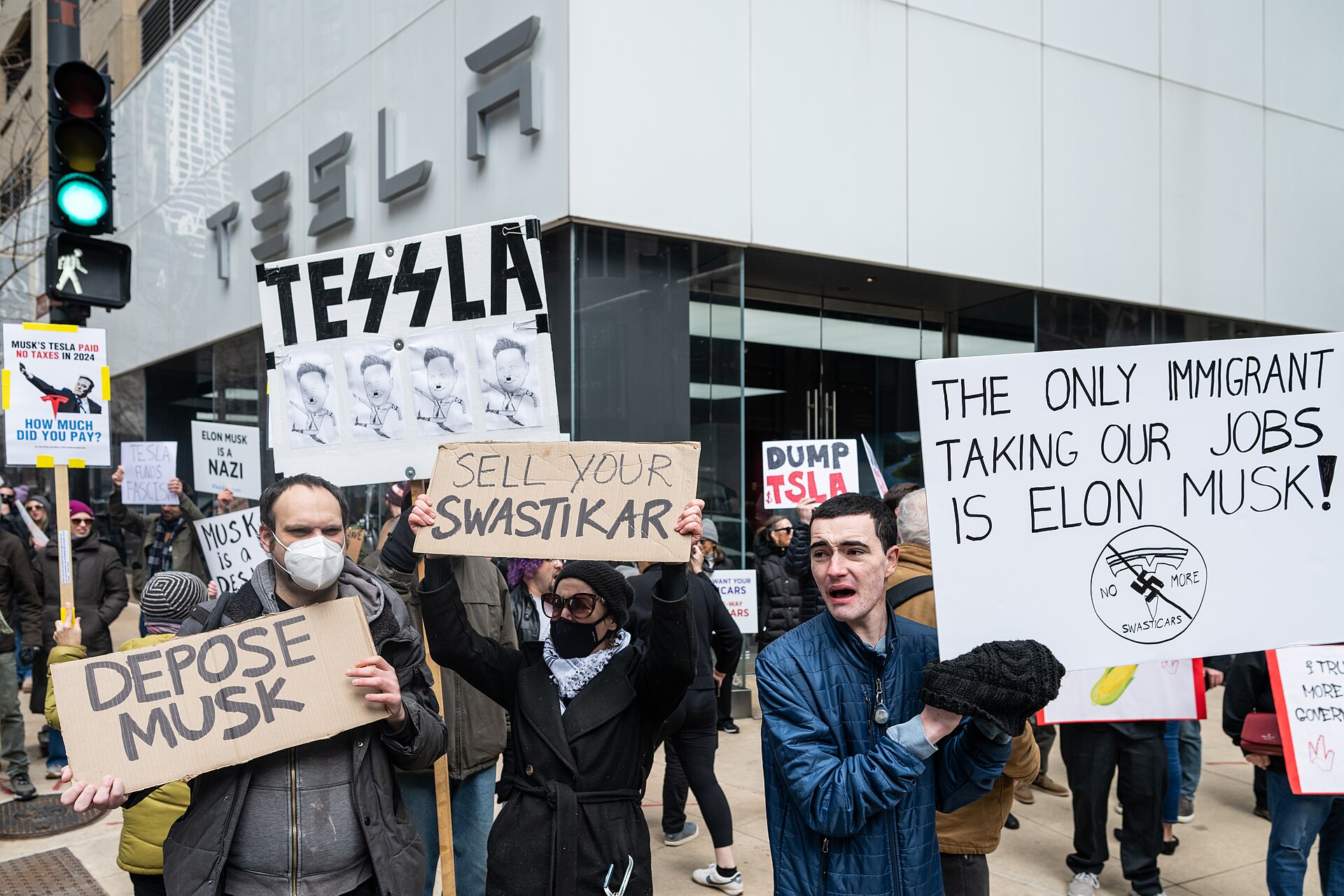


Image Analysis
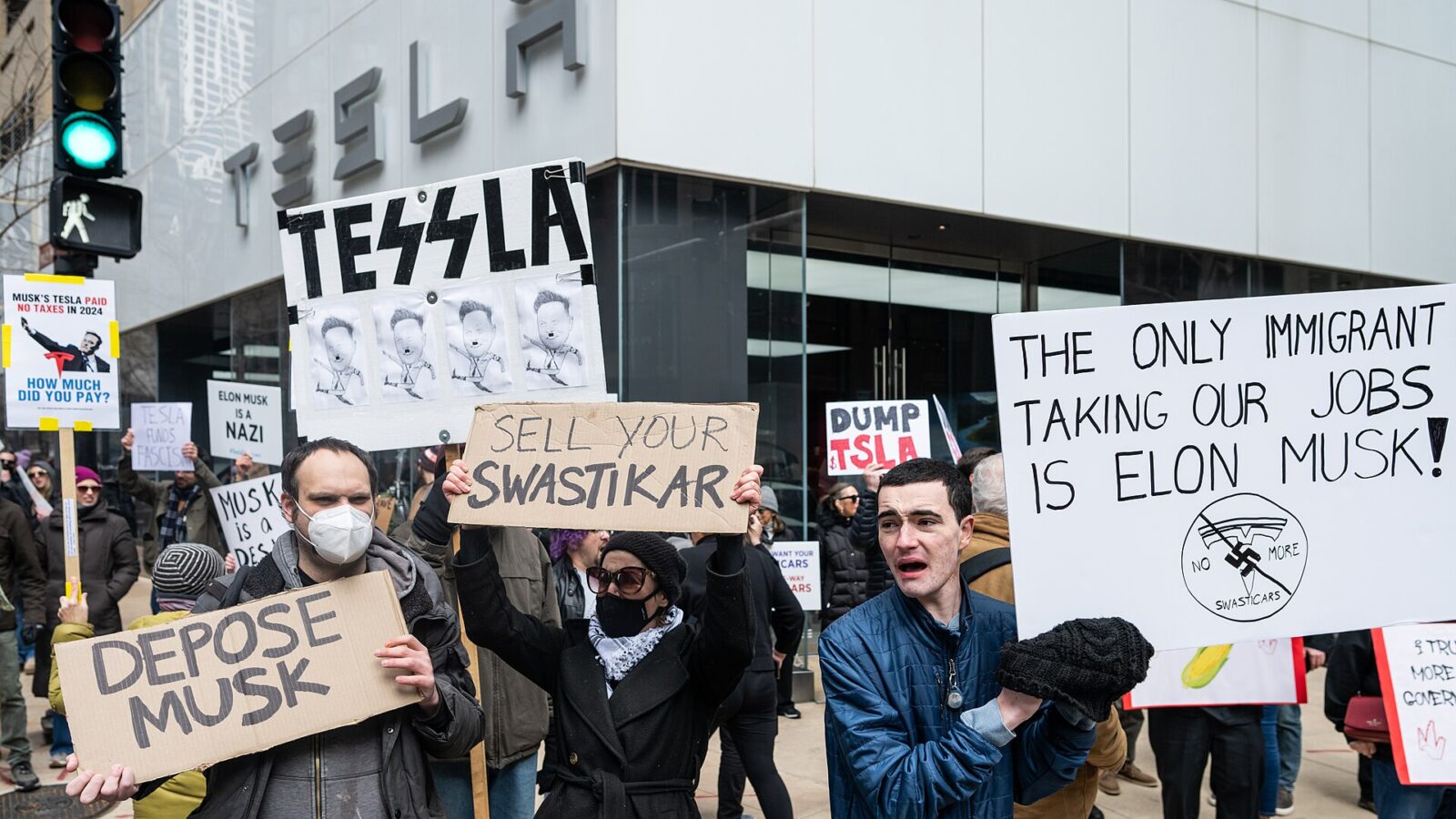
The image captures a fervent protest outside a Tesla dealership, highlighting significant public dissent against Elon Musk amidst the debate over AI’s ethical implications. Protesters employ provocative imagery and slogans, such as "Depose Musk" and "The only immigrant taking our jobs is Elon Musk," suggesting a deep-seated frustration with perceived corporate greed and political influence. The use of distorted images of Musk aligns with themes of villainization, while the sign referencing a swastika evokes historical warnings about authoritarianism. This scene underscores the growing tension surrounding technology’s role in society, bridging the personal accountability of tech leaders with broader economic anxieties.