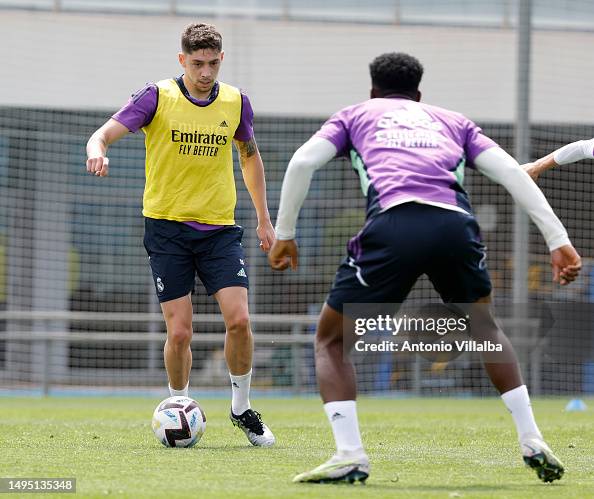
The pristine pitches of Real Madrid’s Valdebebas training ground, usually a sanctuary of tactical discipline and camaraderie, recently became the stage for an explosive confrontation. Reports confirm that midfielders Federico Valverde and Aurélien Tchouaméni were involved in a physical altercation, requiring intervention to separate them. This incident, far from being a mere disciplinary footnote, has ignited a fierce debate: is this a sign of the intense competition that fuels Real Madrid’s relentless pursuit of silverware, or a crack in the foundation of their current golden era, potentially heralding its decline?
For years, Real Madrid has been synonymous with an indomitable spirit, a trait embodied by players like Valverde, known for his boundless energy and combative style. Tchouaméni, a more measured but equally determined presence, represents the future. Their clash suggests a pressure cooker environment where ambition, competition for starting roles, and the sheer weight of expectation are boiling over. This raw intensity, while alarming to some, is precisely what has propelled Los Blancos to unprecedented heights, including multiple Champions League titles and La Liga crowns.
However, such internal friction cannot be entirely dismissed. The question looms: could this escalate into deeper divisions? If key players are at loggerheads, how does this impact team cohesion, especially as the club navigates crucial transfer windows and the inevitable need for generational succession? Manchester United’s alleged interest in Tchouaméni, as reported, adds another layer of intrigue, hinting at potential instability. Conversely, Valverde’s reported hospital visit post-altercation underscores the physical toll such intense rivalries can exact.
Looking ahead five to ten years, this moment could be seen as a critical inflection point. Will the club’s leadership, under figures like Florentino Pérez, effectively channel this competitive fire into sustained dominance, fostering new leaders and integrating emerging talents seamlessly? Or will it fracture the unity that has been their bedrock, leading to player departures and a gradual erosion of their aura?
Scenario 1: The Catalyst for Continued Dominance (60%)
Valverde and Tchouaméni use the incident as motivation. The squad rallies, inspired by the raw passion, and the club secures more trophies, solidifying their legacy. New leaders emerge, and the team adapts to evolving challenges.
Scenario 2: A Period of Internal Strife (30%)
The tension simmers, leading to subtle divisions within the squad. Player morale dips, impacting performance. Key players, like Tchouaméni, might seek opportunities elsewhere, disrupting the team’s balance.
Scenario 3: The End of an Era (10%)
The clash exposes deeper fissures, leading to a significant exodus of talent and a prolonged rebuilding phase. The club struggles to compete at the highest level, marking a definitive end to their dominant period.
The names of Valverde and Tchouaméni, once symbols of Real Madrid’s present and future, are now entwined with a question mark. The outcome will determine whether this volatile training ground encounter becomes a footnote in a glorious chapter or the opening line of a cautionary tale.
💬 Join the Debate
Could this intense rivalry within Real Madrid ultimately forge a stronger, more resilient team, or does it signal the first cracks in their legendary dominance?
Sources: